Higher isn't always better — the lowdown on high blood pressure
I hope you all are enjoying the newest Athlytic update! There are plenty of new features and upgrades, both for Athlytic as well as the Apple Watch in general. For this episode, I wanted to highlight an interesting new development for the Apple Watch — hypertension notifications.
Why is blood pressure important?
We all know our heart health is important, as our heart is responsible for pumping blood throughout the rest of our body: to our brains, our muscles, our lungs, and beyond. Our blood pressure represents the force with which this blood is sent. If it's too low, then we may not be getting our blood supply everywhere it needs to go (resulting in lightheadedness, dizziness, or even passing out).
On the other hand, too high of a blood pressure can be damaging to our organs and even the blood vessels that supply this blood flow. Because of this, high blood pressure (also called hypertension) is a key risk factor in heart disease, heart attacks, and strokes, as well as kidney disease and sexual dysfunction.(1–3)
The tricky part about high blood pressure is that it can be difficult to detect without directly looking for it. This is why your doctor typically checks it at each of your visits. It does not often cause any symptoms on its own — there's no sneezing-with-allergies equivalent to high blood pressure. This is why it has been referred to as the "silent killer."
Nevertheless, routine exposure to high blood pressure causes damage inside our bodies. These stressors on our blood vessels lead to small injuries that require repair, and this repair comes with an increased risk of plaque build-up and hardening (called atherosclerosis, a factor in heart attacks).
So how can I watch out for it? What am I looking for?
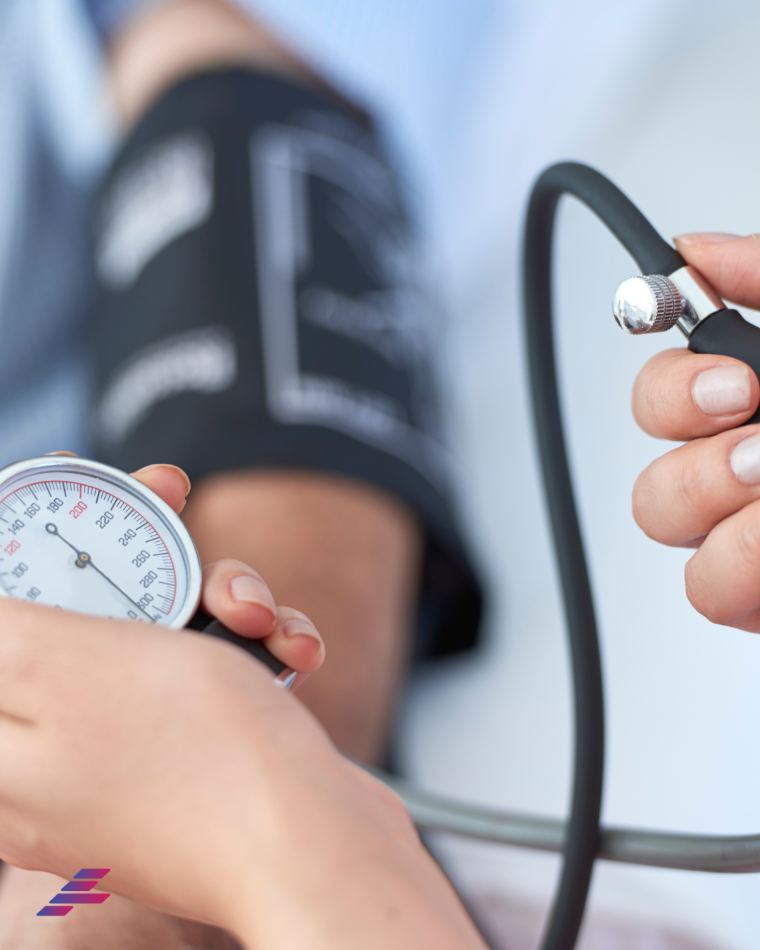
A healthy blood pressure is defined as a value of 120/80 mmHg. This is typically measured by a cuff that inflates over the bicep, though it can be checked in many areas (a wrist cuff is also common). The American Heart Association has some great resources and guides for how to check your blood pressure.(4)
Now, the Apple Watch is not going to report a number to you in the format listed above. Instead, it is simply looking for signs of high blood pressure. It does this by looking at the changes in your blood vessels with each heartbeat. In doing this, it can get a sense of the stressors I discussed above. Over 30 days, if these signs are noted, it will alert the user to consider checking their blood pressure readings.
If you receive this alert, I highly recommend getting your own home blood pressure cuff to start monitoring more routinely and discussing this with your physician.
What can be done to help my blood pressure?
Often, the best first step you can make involves a heart-healthy lifestyle, as discussed by the American Heart Association.(5) This includes not smoking, limiting alcohol, a balanced diet, regular exercise, and sometimes medications.
Fortunately for those of us using Athlytic to stay active, studies have shown a protective effect with any amount of exercise, reducing cardiovascular mortality (chance of death from cardiovascular causes) by 16–67%.(6) In this same study, nonactive individuals had a two-fold increased risk of mortality overall — so let's keep moving!
What's even more amazing is that exercise has been shown to be helpful in patients where medications alone were not achieving the desired goal. After a 12-week course of aerobic exercise, participants known to have difficult-to-treat hypertension were able to achieve a significant reduction compared to their less active peers!(7)
Key takeaways
- High blood pressure (hypertension) is a very common, but treatable, risk factor for heart disease, stroke, and other health complications.
- Blood pressure can be monitored routinely at home, with some signs of high blood pressure detectable by the Apple Watch.
- Staying active (at least 150 minutes of exercise per week) and eating a healthy diet can go a long way to protect yourself from heart disease and high blood pressure.
As always, if you have any concerns or questions about your health, do not hesitate to reach out to your doctor to discuss your individual scenario and find out what is right for you.
Stay active and stay healthy.
Sources & further reading
- Foy CG, et al. Blood Pressure, Sexual Activity, and Dysfunction in Women with Hypertension: Baseline Findings From SPRINT. J Sex Med. 2016 Sep 1;13(9):1333–46.
- Foy CG, et al. Blood Pressure, Sexual Activity, and Erectile Function in Hypertensive Men: Baseline Findings from SPRINT. J Sex Med. 2019 Feb 1;16(2):235–47.
- Kokubo Y, Iwashima Y. Higher Blood Pressure as a Risk Factor for Diseases Other Than Stroke and Ischemic Heart Disease. Hypertension. 2015 Aug;66(2):254–9.
- American Heart Association — High Blood Pressure. heart.org/en/health-topics/high-blood-pressure
- American Heart Association — Changes You Can Make to Manage High Blood Pressure. heart.org
- Rossi A, Dikareva A, Bacon SL, Daskalopoulou SS. The impact of physical activity on mortality in patients with high blood pressure: a systematic review. J Hypertens. 2012 Jul;30(7):1277.
- Lopes S, et al. Effect of Exercise Training on Ambulatory Blood Pressure Among Patients With Resistant Hypertension: A Randomized Clinical Trial. JAMA Cardiol. 2021 Nov 1;6(11):1317–23.
 ATHLYTIC